

Singapore's November calendar puts several races inside four weeks of each other, and every one of them sits in the Northeast Monsoon's wettest stretch of the year. Runners who copy a training plan built for cooler, drier cities arrive at the start line already behind. Humidity, not heat, decides how a session here actually feels, and November brings the highest average humidity of any month. This piece sets out a training approach built around that fact, so a reader chasing a race this month trains smart instead of just training hard.
Why humidity training matters more than heat training in November
The number that matters most this month is not the air temperature. November records the highest relative humidity of the year, at 86.4%, while rainfall increases to around 257mm. That moisture load pushes the apparent temperature far above what a thermometer shows. The average heat index in November, which combines humidity and air temperature, works out to around 42°C.
The reason this matters physiologically is simple. High humidity limits how efficiently sweat evaporates, which is your body's main cooling method. A body that cannot cool itself through sweat has to work harder at every pace, even an easy one.
Rain adds a second complication on top of the heat. November is Singapore's wettest month, averaging 320mm of precipitation across 20 rainy days. Northeast Monsoon showers tend to arrive fast and heavy rather than drizzle all day, so a training plan needs a wet-weather backup, not just a hot-weather one.
Singapore's November race calendar: what you are actually training for
Several events give November runners something concrete to aim for. Run for Inclusion takes place on 7th November 2026. AIA HYROX Singapore 2026 runs from 26th to 29th November at the Singapore EXPO, with admission starting from $147 per person. Run for Hope 2026, a year-end running event, is set for 29 November at Marina Barrage.
Many of these November blocks are really a lead-in to December's bigger prize. The BYD Singapore International Marathon presented by adidas will run over three days, from 4 to 6 December 2026, for the first time. The weekend's races start at the F1 Pit Building and finish at the National Stadium. A runner building fitness through November's heaviest humidity is, in most cases, training for that first week of December.
One caution applies to any race-calendar planning in Singapore: confirm a race is actually happening before you build months of training around it. One event tracker lists the 2026 Great Eastern Women's Run as cancelled, despite earlier listings showing a 1 November date at the National Stadium. Check the organiser's own registration page, not just a listings site, before you commit your long-run schedule to a specific date.
Build training sessions around the clock, not just the mileage
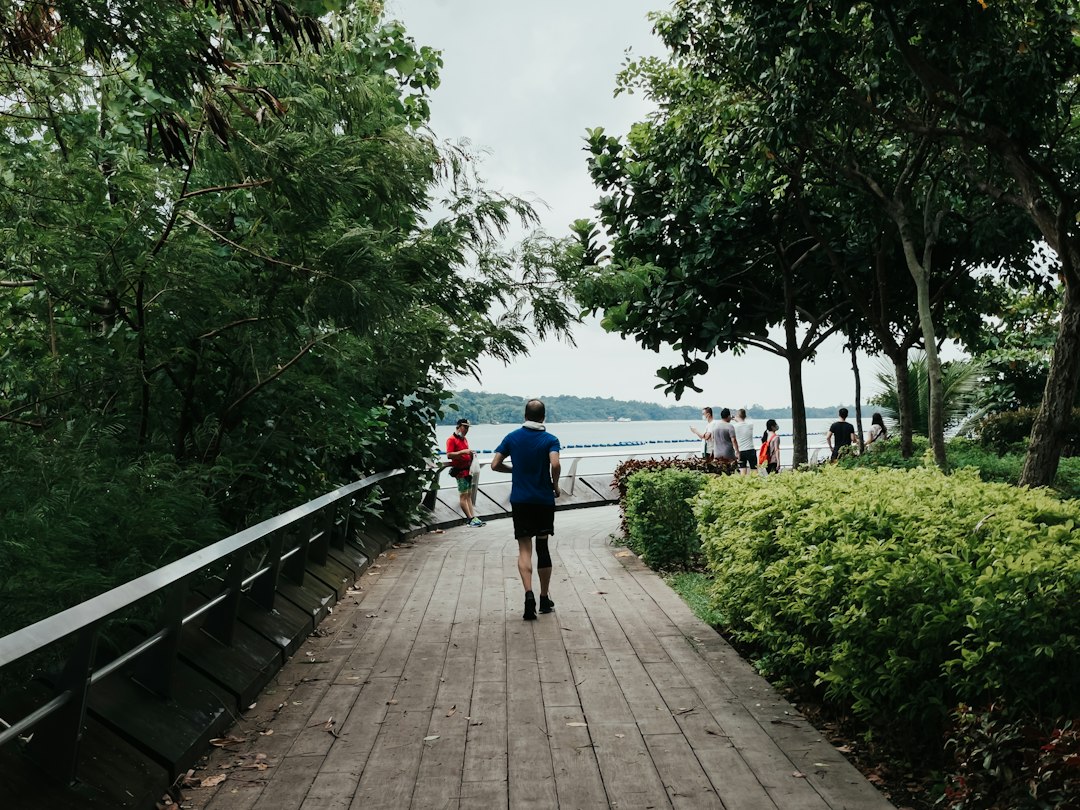
Timing a run correctly in November does more for performance than any amount of extra mileage. The advice from local training guides is consistent: train early morning, roughly 5:30am to 7:30am, or in the evening after 6pm to 7pm, to avoid peak heat and humidity. One Singapore marathon training guide recommends starting long runs at 6am at the latest, noting that by 8:30am the heat becomes punishing for anything over 90 minutes.
The midday window deserves more than a casual warning. Between 10am and 4pm, the heat index often exceeds 35 to 39°C, making runs feel roughly twice as hard. If a shaded route is the only option during daylight hours, routes like MacRitchie or the Rail Corridor offer more cover, or the run can be broken into shorter intervals.
Heat and humidity adaptation is not instant, and the body needs a runway. Allow seven to fourteen days of gradually increasing heat exposure before pushing hard, because jumping into a full-effort session in peak heat without that adjustment raises the risk of heat exhaustion for no real pacing benefit. For a race rather than a routine fitness test, a typical heat acclimatisation programme is best done two to three weeks before race day, according to researchers at NUS Medicine.
Rain changes route choice as much as it changes the forecast. During the Northeast Monsoon, a sudden downpour can turn a long out-and-back route into a soaked, shelterless slog, so looping closer to home or a covered walkway keeps an exit option within reach at all times.
The real objection: does slowing down cost you fitness?
The strongest pushback against this whole approach is obvious: if every session gets slower, where does the fitness come from? It is a fair question, and the honest answer is that pace on the watch stops being the right measure here. In Singapore, training paces often need to be guided by effort rather than speed, especially for longer runs.
This is not a workaround for weaker runners. Finish times recorded at the Singapore Marathon tend to be slower than those at other marathons, because the country's climate is unusually hot and humid. That holds true at the elite level, where pacing strategy already accounts for conditions rather than fighting them.
The coaching consensus backs effort-based training over rigid pace targets for a reason. Gradual heat adaptation, effort-based pacing, and realistic goals let runners stay in control when conditions are hard, and over time, runners who respect the environment tend to finish stronger and recover better. Fitness built this way shows up on race day, when conditions finally match what the body has already adapted to.
Accepting this argument changes three things in practice. Training sessions move to the 5:30am to 7:30am window or after 7pm, long runs get planned around rain radar rather than a fixed route, and progress gets measured against last month's effort in Singapore, not against a pace chart from a cooler country. A runner who builds a November block this way arrives at the Run for Inclusion start line, the HYROX floor, or the BYD Marathon start on 4 December already acclimatised, which is the one advantage no amount of extra mileage can buy back in the final week.