
The Singapore Grand Prix is the most concentrated single-weekend revenue event in Singapore’s calendar, and the 2026 edition on 9 to 11 October gives the city’s hospitality and retail sectors another precisely timed opportunity to capture high-value international spending.
How the race generates incremental tourism revenue
Since its debut in 2008, the Formula 1 Singapore Grand Prix has attracted more than 720,000 international visitors and generated over S$2.2 billion in incremental tourism receipts across industries including hospitality, food and beverage, attractions, and retail. That figure comes directly from the Singapore Tourism Board (STB). It confirms the race’s role as a structural contributor to the city’s services economy, not merely a spectacle.
The race has usually generated around S$130 million per year in incremental spending from tourists attending the race. For context, each edition costs more than S$100 million to stage, and the economic payoff is increasingly viewed through a wider lens. The annual cost of organising the race is estimated at between S$135 million and S$140 million, with the government co-funding 60% of approved costs.
STB expects 2026 international visitor arrivals to reach between 17 and 18 million, bringing in approximately S$31.0 to S$32.5 billion in total tourism receipts. The Singapore Grand Prix sits within a broader October calendar that amplifies this trajectory.
Hospitality: record RevPAR and full occupancy
The hotel sector is the most immediate beneficiary of race weekend. The October 2025 race drove a revenue per available room (RevPAR) of SGD 317.96, a 27.3% rise from the same period the previous year, representing not only a record for October but one of the best performances ever recorded in Singapore’s hospitality sector.

Premium hotels near the Marina Bay Street Circuit see rooms booked months in advance, with hospitality packages priced at a premium. Top-tier properties see rates rise sharply as VIPs, celebrities, and high-net-worth travellers seek the best views of the race. Tourist receipts grow by approximately 45% during the week of the race.
Hospitality experts advise visitors to secure hotel rooms months in advance if their travel coincides with the Formula 1 Grand Prix. That guidance reflects sustained supply pressure, not temporary scarcity.
Retail and SMB spending: the numbers by sector
In the week of the race, small and medium businesses in the city saw traveller spending rise by about 65%, especially in retail and dining. Restaurants recorded approximately 80% uplift, while electronics retailers and grocery stores saw uplifts of around 80% and 120% respectively.
Travel spending from Mainland China, Australia, the United States, and Indonesia accounted for over 40% of spending done by all travellers during the week of the race. This geographic spread confirms that the Singapore Grand Prix draws a genuinely global audience with strong purchasing power.
Spending during race week runs around 30% higher than other weeks across the city. For retail operators outside the Marina Bay circuit zone, this is the key operational signal: the uplift extends well beyond the immediate race precinct.
Expert perspective on the Singapore Grand Prix’s economic function
The Singapore Grand Prix does have a material impact on tourism receipts, which in 2023 were around S$27 billion. The overall contribution to GDP is small, at roughly 0.3%. However, the event gives Singapore a major global branding opportunity and is an avenue to extend soft power. The broadcast reach amplifies Singapore’s visibility in markets that matter most for trade and investment. For a city that competes on positioning as much as on price, that visibility has a compounding value that does not show up in a single year’s RevPAR figure.
Industry perspective, equity research and financial analysis professionals in Singapore
The Grand Prix Season Singapore: extending the retail window
STB’s Grand Prix Season Singapore (GPSS) initiative deliberately extends the commercial window beyond 3 race days. Grand Prix Season Singapore will take over the city from 2 to 11 October 2026, bringing race-themed lifestyle experiences across multiple precincts throughout Singapore.



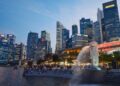


STB works with businesses in the Marina Bay area and across Singapore to capitalise on the race through the GPSS initiative, which offers 10 days of stakeholder-led race-themed festivities that spotlight attractions, retail, dining, and entertainment. This structure converts a 3-day sporting event into a 10-day commercial programme.
The return of precinct parties at Orchard Road, Clarke Quay, Kampong Gelam, and Sentosa drives footfall across these precincts, creating spillover economic benefits for local businesses. Retailers in these districts can treat GPSS as a structured revenue period, not a background event.

Local business integration and supply chain participation
More than 700 Singapore-based companies are subcontracted annually for the race, with local businesses involved in race preparations and operations also reaping direct economic benefits. Annually, around 30,000 staff, contractors, and stakeholders are accredited to work at the Marina Bay Street Circuit, with training provided to students for operational roles within the event grounds.

Agencies provide access and better wayfinding within and around the Marina Bay area, and have worked to reduce the road closure period from 12 days in 2008 to 7 days today. That reduction directly addresses the disruption concern that smaller retailers near the circuit have historically raised.
Beyond direct visitor spend, the race delivers broadcast exposure that no advertising budget could replicate. Over 1 billion global viewers tune in annually, giving Singapore prime-time visibility in markets that matter most for trade and investment.
The Singapore Grand Prix as a precision economic instrument
The Singapore Grand Prix is not simply a tourism event. It is a tested, data-backed mechanism for compressing high-value international spending into a single fortnight. Supported by strong international connectivity, premium hospitality offerings, and a reputation for hosting world-class events, the city-state continues to strengthen its position as Southeast Asia’s leading event tourism destination, with visitor arrivals projected to approach 18 million and race-related travel demand already increasing.
For hospitality and retail operators, the Singapore Grand Prix provides a calendar date with measurable, repeatable uplift across occupancy, RevPAR, food and beverage revenue, and SMB retail spending. Businesses that plan their inventory, staffing, and promotions around the Singapore Grand Prix consistently capture a larger share of that compressed demand than those that treat it as background noise. The 2026 race weekend runs from 9 to 11 October. The preparation window is now.
Discover more about Singapore Grand Prix
- Grand Prix Season Singapore 2026: official STB programme
- Visa: affluent and nighttime spending at the F1 Singapore Grand Prix
- South China Morning Post: is Formula One’s first night race paying off for Singapore?