


Haze season is back over Singapore. Singapore's air quality fell to its worst level this year on Friday (9 October 2026), as haze from fires in Indonesia pushed the 24-hour Pollutant Standards Index (PSI) to 192 in the central region at 5pm. The deterioration coincided with the start of the Formula 1 Singapore Airlines Singapore Grand Prix weekend, held from 9 to 11 October, alongside several international conferences in the city-state. This guide walks through the PSI and PM2.5 numbers, the mask rules, and the home fixes that actually cut what you breathe.

What haze season looks like in October 2026
Smoke from southern Sumatra and Kalimantan keeps drifting toward Singapore whenever winds turn southeast or south. Moderate to dense smoke plumes from southern Sumatra continued to drift towards Singapore and the surrounding region, and smoke haze was also observed from fires in Kalimantan. On 4 October 2026, the 24-hour PSI sat at 73 to 96, in the Moderate range. Five days later, conditions looked very different.
At 9am on 9 October, the central region logged 170, surpassing the previous 2026 high of 167 recorded in the same area on 29 September, and by 2pm the reading had reached 186. By 5pm the 24-hour PSI touched 192, the worst reading of the year. That jump happened over a single week, not a single day. Treat any one reading as a snapshot, not a forecast, through the rest of the dry season.
Check PSI and PM2.5 before you head out
Singapore tracks two different numbers, and they answer different questions. During haze season, a one-hour average of PM2.5 concentrations is recommended to assess rapidly changing pollution levels, while a 24-hour PSI score is recommended for planning and assessing health impacts the following day. For immediate outdoor decisions, the 1-hour PM2.5 reading is more useful than the 24-hour PSI because it measures the average fine-particle concentration over the preceding hour and reacts faster to a sudden influx of smoke. Use the PSI forecast to plan tomorrow's run and the PM2.5 reading to decide whether to step outside in the next hour.
NEA sorts the 24-hour PSI into five bands. A reading of 0 to 50 is Good, 51 to 100 is Moderate, 101 to 200 is Unhealthy, 201 to 300 is Very Unhealthy, and anything above 300 is Hazardous. NEA publishes the hourly PM2.5 figure alongside the PSI on the myENV app, the haze microsite at haze.gov.sg, the NEA website, Facebook, and Twitter. Bookmark one of these channels before the next dry spell, not during it.

The advisory changes by group, not just by number. Healthy adults can carry on as normal when the 24-hour PSI is Moderate, and should reduce prolonged or strenuous outdoor activity once it turns Unhealthy. Elderly residents, pregnant women, and children follow the same Moderate threshold, but should minimise prolonged or strenuous outdoor activity, not merely reduce it, once PSI turns Unhealthy. People with chronic lung or heart disease should avoid prolonged or strenuous outdoor activity altogether once PSI enters the Unhealthy range.

Choose and wear an N95 mask correctly
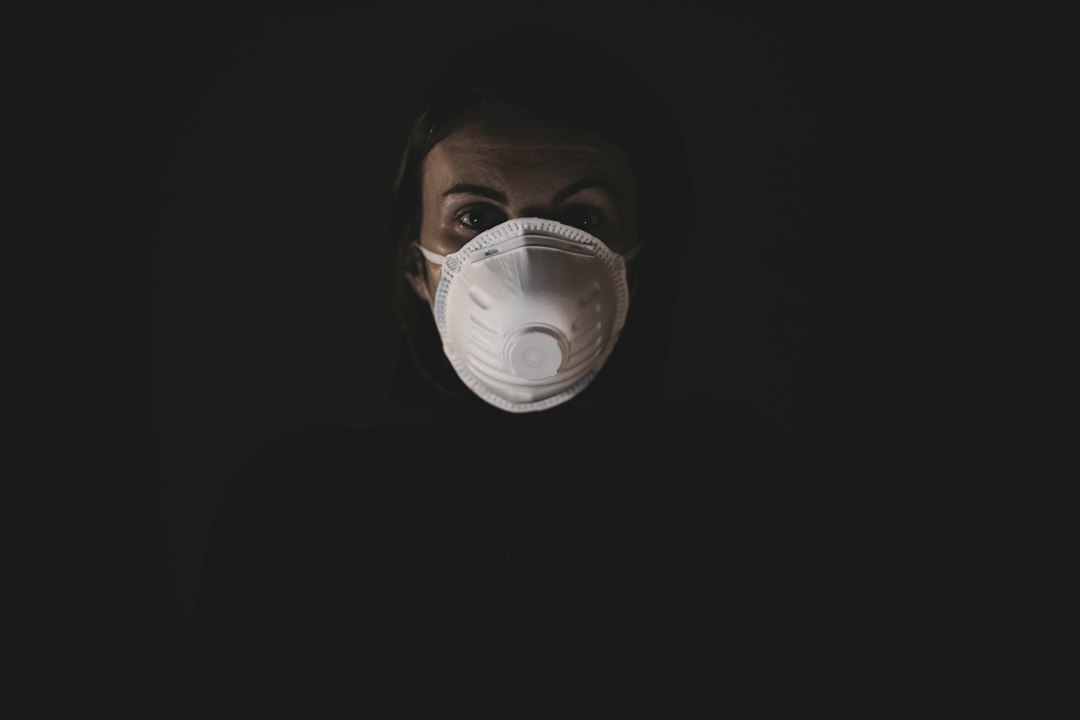
Do not reach for an N95 mask the moment the sky looks grey. Wearing one is not necessary indoors or during brief outdoor exposure, such as walking from the bus stop to a nearby building. N95 masks become recommended once PSI passes 300 and prolonged outdoor exposure cannot be avoided. If you have chronic lung or heart disease, are elderly, or are pregnant, bring that threshold down to PSI 200 for any long outdoor stretch.
Surgical or cloth masks are not effective during heavy haze. An N95 respirator filters the air before it reaches your lungs, but only if it fits properly, with no gaps around the nose and chin. You can reuse the same N95 up to five times unless it becomes soiled or loses its shape. Check for NIOSH certification before you buy, since that mark confirms the filtration standard.
The current Haze Task Force has also set up a safety net for people who cannot easily buy masks. Once PSI enters the Very Unhealthy range of 201 to 300, People's Association grassroots groups start distributing N95 masks to eligible residents. Pioneer Generation and Merdeka Generation members, CHAS Blue and Orange cardholders, ComCare recipients, pregnant women, children aged seven to sixteen, and people with conditions such as asthma can all collect masks at People's Association venues. Vending machines at selected transport hubs and social service offices carry masks too.
Clean the indoor air you control
Your home is the one place you fully control. Running the air-conditioner improves circulation, but if it is a window unit that draws in unfiltered outside air, close the outdoor air intake opening first. Pair it with a HEPA-filter air purifier sized correctly for the room, since an undersized unit will not keep up with a hazy afternoon. Keep windows and doors shut while the PSI sits in the Unhealthy band or higher.






NEA points to air purifiers with High Efficiency Particulate Air filters as the most effective option against the fine particles in haze. Match the purifier's rated floor area and flow rate to the actual size of the room, not the size of your flat. A unit built for a bedroom will struggle in an open-plan living and dining area. Drinking more water and eating more fruit and vegetables than usual also helps support your immune system during haze season.
Know where to get help if symptoms start
Short-term haze exposure can cause eye, nose, and throat irritation, coughing, wheezing, or breathlessness, and it can worsen existing heart or lung disease. If you notice any of these, do not wait for the PSI to improve on its own. Anyone who struggles to breathe at rest or during light exertion should see a doctor before putting on an N95 mask, not after. Call your GP or polyclinic the same day symptoms start, rather than the next morning.
When PSI enters the Very Unhealthy range, air-conditioned rooms in Community Clubs and selected Residents' Committee and Residents' Network centres open as haze shelters. Find your nearest Community Club through the People's Association directory, and call ahead to confirm opening hours. These shelters exist for exactly this kind of week, so use them rather than staying in a hot, sealed flat with poor airflow.
What to do first, and what can wait
Do these before the next haze spike, not during it. Save the NEA haze microsite and the myENV app to your phone's home screen, and check your eligibility for free N95 masks under the Pioneer Generation, Merdeka Generation, or CHAS Orange schemes now, while queues are short. Buy one NIOSH-certified N95 mask per household member who has chronic lung or heart disease, and confirm it fits before you need it. Check that your air-conditioner's outdoor intake can close, since that single switch does more than most people expect.
A whole-home HEPA purifier can wait if your bedroom aircon already seals properly and the PSI near you stays under 100 most days. It becomes worth the cost once readings in your region regularly cross into the Unhealthy band, or once a household member falls into a vulnerable group. Long-term projects like re-sealing windows or upgrading ventilation can wait until the dry season ends. Your first move this week is simply knowing which number to check, and when.
Learn more about haze season
- Air pollution FAQs
- Haze in Singapore: How to Stay Safe
- N95 masks for eligible Singaporeans, haze shelters announced