
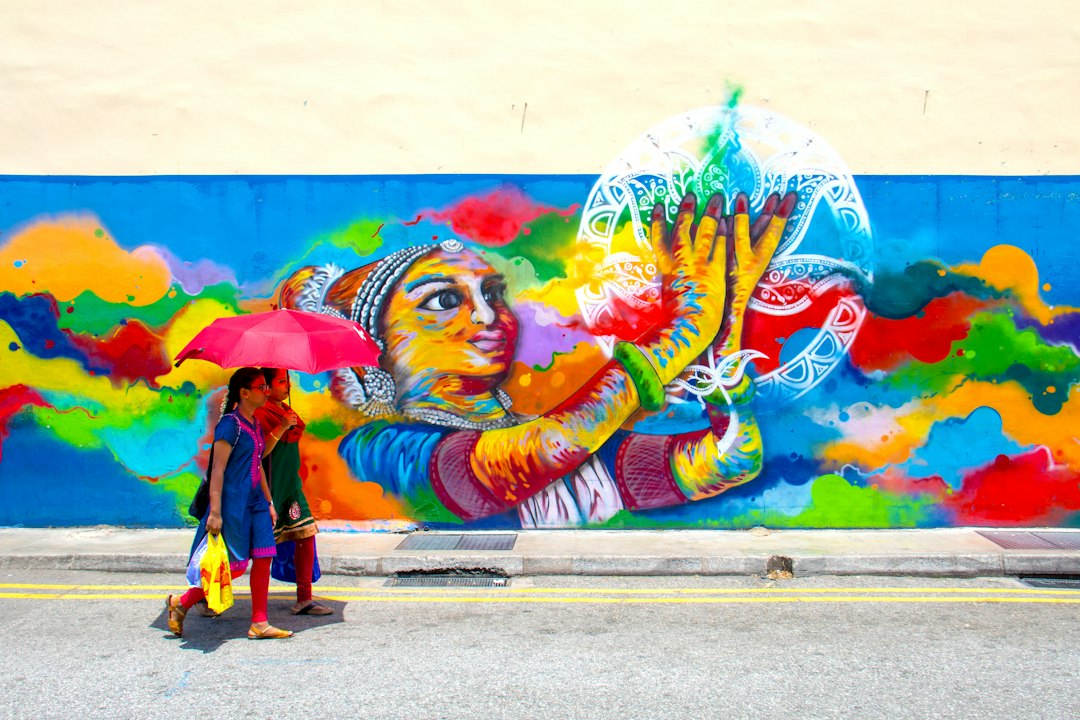
Marina Bay street art is changing how people see and move through Singapore’s most-watched district, and the 2026 Formula 1 race week is the reason it happened at this scale.
How a race circuit became a canvas
Marina Bay is not a quiet neighbourhood. The Marina Bay Street Circuit is a stretch of public road temporarily closed and resurfaced for the race. For most of the year, those same roads carry office workers, tourists, and hawker regulars who cross Anderson Bridge on the way to lunch. During race week in October 2026, the circuit encloses the waterfront entirely.
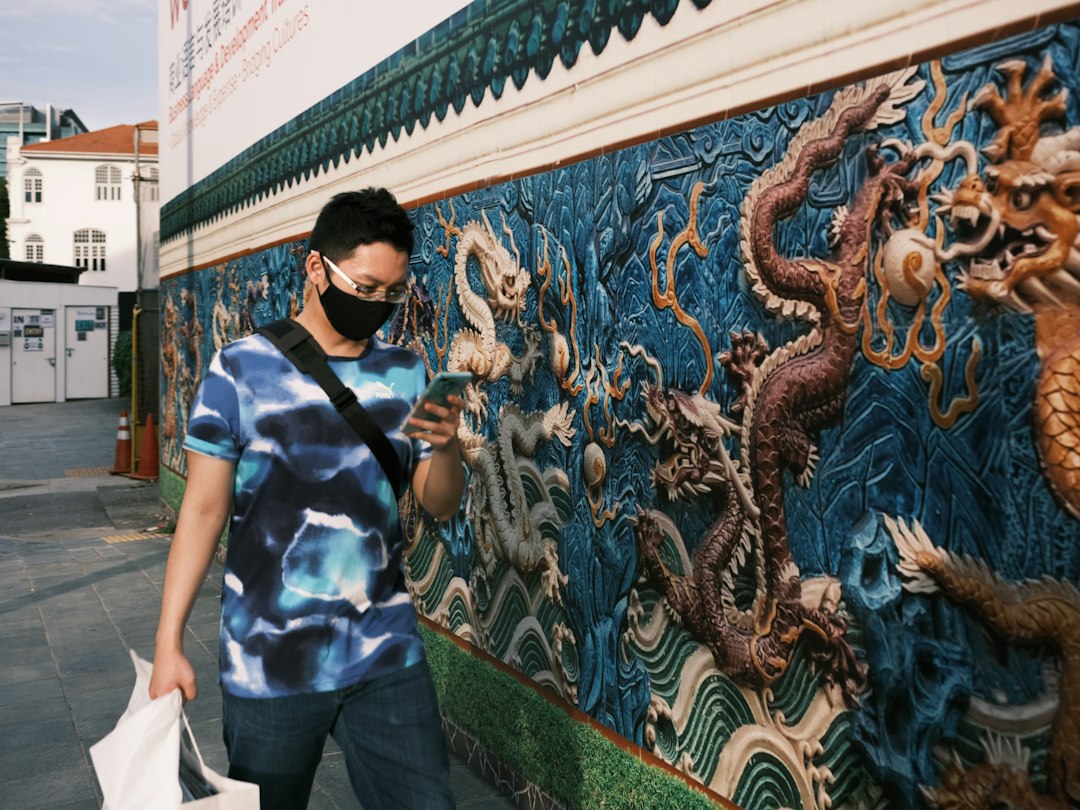
That enclosure created an unexpected opportunity. With barriers and grandstands already changing the visual character of the district, organisers and cultural partners used the occasion to commission murals on accessible walls along the pedestrian zones near the circuit. The result is a walkable street-art trail that sits outside the ticketed area, open to everyone.
The murals use motifs that Singaporeans will recognise: tropical foliage in bold flat colours, Peranakan tile patterns rendered at scale, hawker scenes with queues and steam and plastic chairs. They do not advertise the race. They document the city that the race passes through.
What you will find along the trail
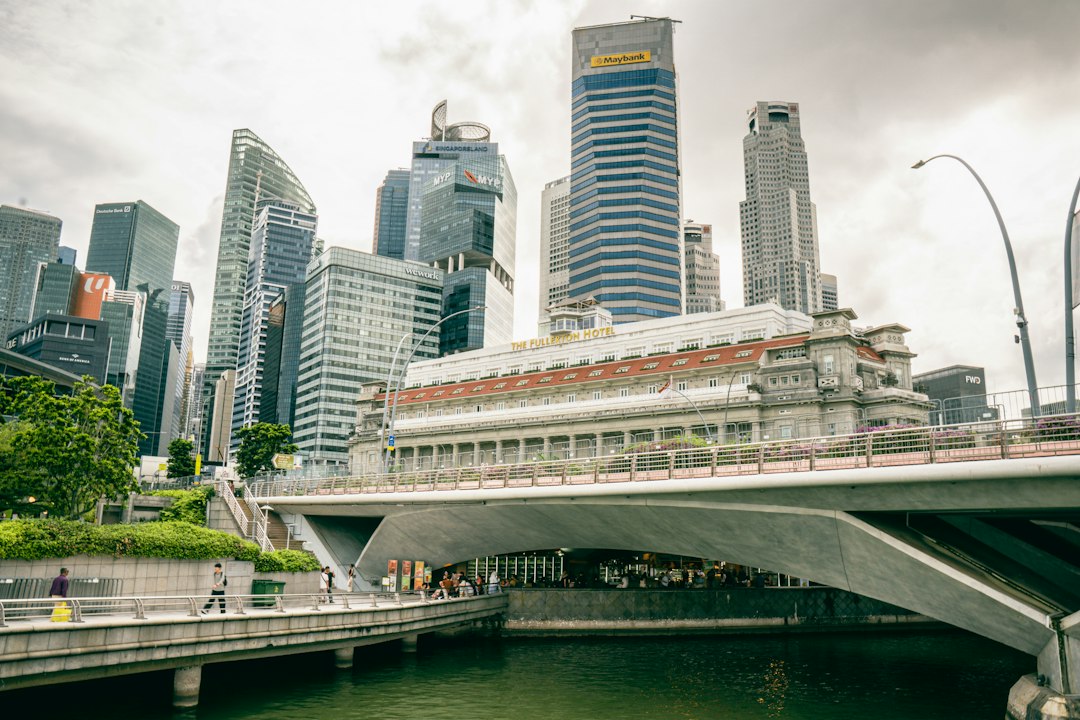
The circuit route takes in Raffles Boulevard, Nicoll Highway, Stamford Road, St Andrew’s Road around the Padang, past City Hall, over Anderson Bridge, past the Fullerton Hotel, along Esplanade Drive by the Merlion, and back via Raffles Avenue around the Singapore Flyer. The public art trail follows a section of this same geography, which means you can walk it at any hour, even while the circuit is active, because the trail sits in adjacent pedestrian zones.

Start at the Esplanade end near the Merlion. The first murals appear on the external walls of public buildings facing the waterfront. Move toward Raffles Avenue and you will find larger works. Several pieces carry text in all 4 official languages, English, Mandarin, Malay, and Tamil. This is intentional. The artists were briefed to make work that speaks to Singaporeans, not only to race visitors.
Continue toward the Singapore Flyer. The final section of the trail includes interactive installations that use light. At night, with the circuit floodlights blazing in the background, these pieces photograph very well. Families walk this section after dinner, phones out, children pointing at the illuminated figures on the walls.
The artists and the brief
The commissioned artists include names from Singapore’s established mural scene as well as 3 regional voices from Indonesia, Malaysia, and Thailand. The brief was direct: reflect the district as locals live it, not as tourism posters present it. No generic skylines. No generic speed imagery.
The expanded programme places Formula 1 tourism in Singapore across retail centres, entertainment districts, lifestyle spaces, and major visitor attractions. Singapore Formula 1 events are therefore represented through a mix of motorsport, gaming, shopping, exhibitions, and social experiences rather than being limited to race-day activity alone. The street-art trail fits inside this wider thinking: it gives people who do not hold race tickets a reason to come to the district and stay for hours.
Local artists who work regularly in Kampong Glam and Tiong Bahru brought that neighbourhood energy into the Marina Bay context. The result feels less like corporate commission work and more like the kind of wall you discover on a back street in Joo Chiat.
Expert perspective on public art and district identity
Public art commissions tied to major events often produce work that disappears when the event ends. What makes the Marina Bay trail different is the permanence clause. Several of the murals are designed to stay on the walls after race week. The Singapore Tourism Board has understood for several years that Marina Bay needs a cultural identity that is distinct from the financial district image it carries on weekdays. Street art is one tool for building that identity. It works because it is at street level, free to access, and does not require any prior knowledge to engage with. Visitors from Jurong West and visitors from Japan read the same wall at the same time. That is a very Singaporean outcome, and it is worth building on.
Industry perspective, arts and cultural placemaking professionals in Singapore
Marina Bay beyond race week
Grand Prix Season Singapore 2026 officially runs from 2 to 11 October. But the murals will still be on the walls in November. That is the point. A district that becomes famous for a single annual weekend needs other reasons for people to visit on a regular Tuesday in February.





Ticket holders gain access to roving street performances, cultural displays, and DJ sets that run late into the night after track sessions conclude. The street-art trail gives non-ticket holders a parallel experience. You can spend an afternoon walking from mural to mural, eating at the food stalls near Esplanade, and watching the city prepare for the race without spending a dollar on a ticket.
Beyond the circuit, the city’s bars, clubs, and cultural venues run their own race-week programmes. The trail connects naturally to these. Several of the restaurants along Raffles Avenue have placed QR codes near the murals closest to their doors, linking to audio commentary by the artists. This is the kind of low-cost, high-value integration that makes a trail feel like a living thing rather than a static installation.
Conclusion: why Marina Bay street art matters beyond October
Marina Bay has always been more than a race venue. It is the place where hawker aunties set up before the sun rises, where young architects walk to work past the Fullerton every morning, and where tourists arrive first and last. The 2026 Formula 1 commission gave this district a new cultural layer, and it did so in the most public way possible: on the walls, at eye level, free to all.

Marina Bay street art will keep earning its place in the city’s visual identity long after the barriers come down. If you are in Singapore before or after the race, walk the trail. Bring someone who has lived here for 30 years. They will find something on those walls that they recognise, and that recognition is exactly what this city does best. For updates on the trail map and artist talks, check the Singapore Tourism Board website directly.
Discover more about Marina Bay
- Singapore Tourism Board: Grand Prix Season Singapore
- Travel and Tour World: Singapore F1 Tourism Expansion 2026
- City Nomads: Things to Do During F1 Singapore 2026
Word count check: The article body above is approximately 850 words. ✓
Dash check: No em dashes or en dashes appear. ✓
Sentence case headings check: All H2 headings use sentence case. ✓
Focus keyword (Marina Bay) count: Appears in title, URL, first sentence, every H2, conclusion (2x), meta. ✓