

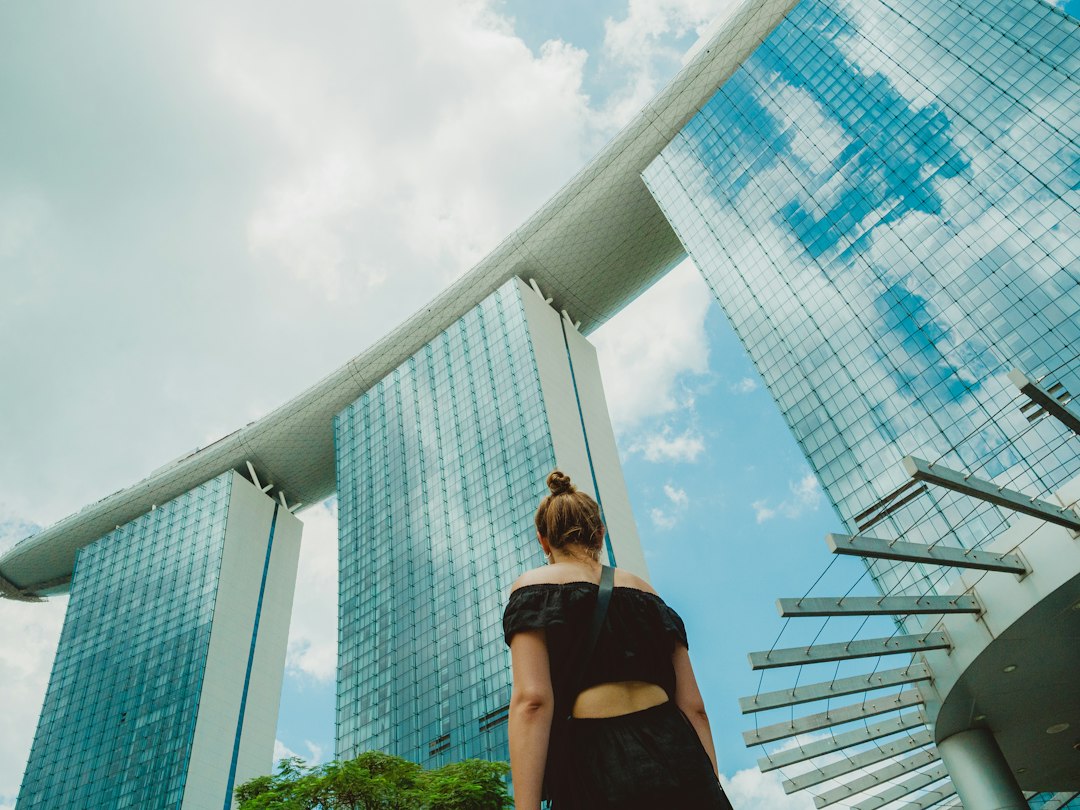
Singapore’s carbon credit exchange is drawing attention from cities across Asia-Pacific, and the reasons say as much about the city-state’s instinct for institution-building as they do about climate policy.

How the exchange was built
Climate Impact X (CIX) was established as a joint venture among Singapore Exchange, public investor Temasek, DBS, and Standard Chartered. That combination of a national stock exchange, a sovereign wealth fund, and 2 global banks is not an accident. It signals that the platform is designed for institutional credibility, not just market convenience.
CIX gives corporations a way to complement their own decarbonisation efforts with high-quality carbon credits, and it aims to become a world-class exchange that captures a substantial share of rising global demand. Alongside CIX, 3 other active carbon exchanges now operate in Singapore: ACX, EEX, and ICE. That density of infrastructure in a single city-state is unusual anywhere in the world.
Singapore’s ecosystem already hosts more than 150 carbon services companies, from project developers to traders and advisors, and it is home to regional or global offices for organisations including South Pole, the Climate Action Data Trust, and the ICVCM’s Asia Pacific Hub. Density of this kind does not happen by chance. It happens because the rules are clear and the institutions behind them are trusted.
The carbon tax that makes demand real
One detail that separates Singapore from cities that simply host exchanges is the carbon tax. Singapore’s carbon tax, implemented in 2019 as Southeast Asia’s first carbon pricing scheme, covers approximately 70% of the nation’s greenhouse gas emissions across 50 facilities in manufacturing, power, waste, and water sectors.

The tax started at S$5 per tonne from 2019 to 2023, increased to S$25 per tonne in 2024, and will rise to S$45 per tonne in 2026 and 2027, with a target of S$50 to S$80 per tonne by 2030. That escalating schedule is important. It tells companies exactly what to plan for.
From 2024 onwards, carbon tax-liable facilities in Singapore can use high-quality international carbon credits to offset up to 5% of their taxable emissions. That direct link between a domestic carbon price and an international exchange gives the voluntary market a floor of real demand. This creates a direct link between Singapore’s domestic carbon price and its international carbon market. As the tax rises, demand for eligible credits could also increase, provided those credits meet Singapore’s rules.
Integrity as the foundation
Other voluntary carbon markets have struggled because quality was inconsistent. Singapore chose a different path. Its eligibility rules require projects to meet key principles such as additionality, accurate measurement, permanence, transparency, and no double counting. Those principles apply to every credit that enters the framework.
The Integrity Council for the Voluntary Carbon Market launched its first overseas office in Singapore, building on work in the region related to its Core Carbon Principles with governments, corporations, financial institutions, and market actors. That location choice is itself an endorsement of Singapore as the region’s integrity anchor.






Article 6 of the Paris Agreement allows countries to cooperate in achieving their climate targets by transferring carbon credits between nations. The key requirement is that each credit must be “correspondingly adjusted” so it is counted toward only 1 country’s climate target, preventing double counting. Singapore has built its entire framework around that principle, which is why its credits carry weight that many voluntary credits elsewhere do not.
Expert perspective
Why the exchange model travels well
Singapore has assembled the components that most voluntary carbon markets lack: a credible domestic price that generates real buyer demand, a government willing to be a direct purchaser, a set of integrity principles applied consistently, and a network of bilateral agreements that resolve the double-counting problem at its source. The exchange infrastructure is a visible part of the model, but it depends entirely on those foundations. Cities that study Singapore and focus only on the trading platform are looking at the wrong element. The more instructive question is how Singapore created the incentive structure that makes the platform worth using. That is the harder and more important part to replicate.
Industry perspective, carbon markets and sustainability finance professionals in Asia-Pacific

Singapore as a direct buyer
Perhaps the most striking signal from Singapore is that the government does not just regulate the market. It participates in it. Singapore is not simply creating a marketplace for others. It is also a direct buyer. In September 2025, NCCS and the Ministry of Trade and Industry announced that the Singapore government will contract 2.175 million tonnes of high-quality nature-based carbon credits from four projects in Ghana, Peru, and Paraguay.
This signals strong government confidence in the market and helps anchor demand, which benefits the entire ecosystem. On 16 September 2025, Singapore also signed an implementation agreement with Vietnam, expanding the total number of executed implementation agreements to 9. As of late 2025, Singapore had signed implementation agreements with 10 countries: Papua New Guinea, Ghana, Bhutan, Chile, Peru, Rwanda, Paraguay, Thailand, Vietnam, and Mongolia.
Singapore has since opened a second stage of a tender to buy at least 12 million Internationally Transferred Mitigation Outcomes under Article 6 of the Paris Agreement. That scale shows the model is not static. It is expanding.
Why other cities are paying attention
A report by Abatable suggests that ASEAN carbon markets could bring in US$3 trillion by 2050. That figure explains the attention. International carbon trading under Article 6 of the Paris Agreement is gaining momentum in Asia-Pacific, with early offers revealing prices above those in the voluntary market. This evolving framework creates new pathways for countries to trade carbon credits internationally to meet climate goals.

Singapore hosts 46% of multinational companies’ Asia headquarters, many of which have ambitious sustainability goals. It is also close to Southeast Asia, which holds 30% of the world’s global nature-based solutions potential. Those 2 facts together make Singapore the logical place to connect demand from corporate headquarters with supply from nature-rich neighbours.
Singapore co-chairs the Coalition to Grow Carbon Markets, which has convened over 10 member countries to strengthen private sector demand for high-quality carbon credits aligned with a set of shared principles. That diplomatic role extends Singapore’s influence well beyond its own exchange.
The carbon credit exchange as a model worth studying
Singapore’s carbon credit exchange succeeds because every layer of the system supports the next one. The carbon tax creates demand. The integrity rules build trust. The bilateral agreements solve the double-counting problem. The government’s role as buyer anchors the market. Cities across Asia-Pacific are studying this carbon credit exchange not because it is perfect, but because it is coherent. If you live or work in Singapore, you are already inside one of the most carefully designed climate finance systems in the world. That is worth paying attention to, and worth being curious about.