


Singapore headquarters numbers tell a clear story: more than 4,000 multinationals have chosen this city-state as their base for Asia-Pacific operations, and the data shows exactly why that number keeps rising.
A dominant share of regional investment
Singapore does not simply attract investment. It captures the majority of it. Singapore commands nearly 70 percent of inward investments into Southeast Asia in 2023, up from 62 percent in 2022. That is not a marginal lead. It reflects a sustained structural advantage that other cities in the region have not been able to replicate.

Despite global uncertainties, Singapore attracted S$14.2 billion in foreign direct investment in 2025, according to the Economic Development Board. The city-state saw a direct increase in regional headquarters, research and development activity, and other strategic investments, reinforcing its hub status.
Total assets of Singapore’s corporate sector increased 6.8 percent, reaching S$14,373 billion as at end 2024, with the finance and insurance industry accounting for 71.6 percent. These figures show that global capital is not simply passing through Singapore. It is being deployed and managed here at scale.
Talent that no other city in Southeast Asia can match
Headquarters decisions follow talent. Singapore wins on this measure by a significant margin. Singapore ranks first globally on the 2025 Global Talent Competitiveness Index. This is the foundation that makes every other advantage more valuable. Without the right people, connectivity and low taxes mean nothing.
Singapore’s strong core of local talent, combined with its openness to global professionals, makes it the best place to build a high-performing regional team. For multinational companies, this matters because Asia-Pacific operations require people who understand multiple markets, languages, and regulatory environments at the same time.

Within a 4-hour flight radius lies Southeast Asia’s 670 million-strong consumer base, while advanced infrastructure, including 22 subsea cables and 50 percent of the region’s data centre capacity, enables seamless and secure operations. Talent and infrastructure work together here in a way that is rare in any other city globally.
Connectivity that reaches the whole region
Physical and digital connectivity are both critical for a regional headquarters. Singapore performs at the top on both. Singapore connects to nearly 160 cities via 100 airlines, and global companies with regional headquarters here, such as Amazon, 3M, and Syngenta, benefit directly from this strategic connectivity and world-class infrastructure.
Investment in Singapore includes Amazon’s AWS Asia-Pacific Hub, OpenAI’s Asia-Pacific Hub, and Databricks’ Asia Pacific and Japan Hub. The fact that these technology companies anchor their Asia operations in Singapore is not coincidental. It signals to other companies that the digital infrastructure is reliable and the talent pool is available.
Streamlined customs procedures process 90 percent of electronics permits within 10 minutes. For companies that move physical goods across the region, this operational efficiency translates directly into cost savings and faster delivery to customers.
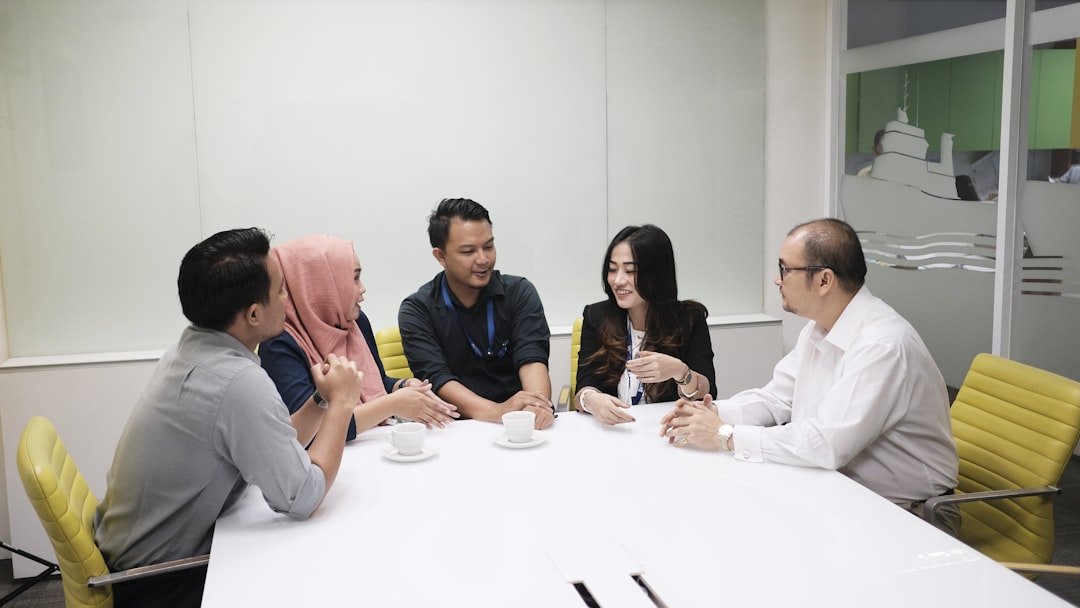
Expert perspective on Singapore headquarters appeal
Singapore offers something that is genuinely difficult to replicate: a combination of regulatory transparency, deep talent pipelines, and direct access to Southeast Asia’s fastest-growing consumer markets. Companies that establish their Singapore headquarters do not simply gain a tax-efficient address. They gain a platform for building teams, accessing capital, connecting with research institutions, and coordinating operations across 10 ASEAN markets from a single, stable base. The decision is also a signal to investors, partners, and customers across the region that a company is serious about Asia for the long term. No other city in Southeast Asia currently offers that combination of factors at the same level of institutional depth. The competitive advantage compounds over time as companies build local networks and embed themselves in the ecosystem.
Industry perspective, finance and corporate investment professionals in Singapore






A stable base in a volatile world
Geopolitical risk has become a central factor in corporate location decisions. Singapore’s position on this is well established. Singapore is consistently ranked as one of the least corrupt countries in the world and the most transparent in all of Asia on the Corruption Perceptions Index.
Singapore’s second-place global competitiveness ranking in the 2025 IMD World Competitiveness report underscores the strength of its rule of law, government efficiency, and infrastructure. For a chief financial officer deciding where to place a regional treasury or operations centre, this ranking carries real weight.
Many Chinese companies are also choosing to establish their regional headquarters in Singapore to reduce geopolitical risk and expand their global business. TikTok and Shein have both set up company headquarters in Singapore. This reflects a broader pattern. Singapore benefits from its neutral positioning and strong relationships with both Western markets and Asian economies.

Innovation and research that companies can use
Singapore headquarters are not just administrative centres. They are increasingly platforms for research, product development, and innovation. Singapore has consistently channelled substantial resources into research and development, with cumulative investments to date amounting to S$60 billion, providing stability for companies pursuing multi-year innovation agendas.
The city-state hosts regional headquarters for 8 of the top 10 major pharmaceutical companies, including Abbott, Johnson and Johnson, and Pfizer. Biomedical manufacturing alone generated S$38.1 billion in output in 2023, making it a key pillar of Singapore’s diversified manufacturing industry.

In the 2025 Global Innovation Index by the World Intellectual Property Organization, Singapore ranked second in Asia for innovation capability, and its startup ecosystem is valued at S$184 billion, reflecting strong investor confidence and market maturity. For companies that want to innovate from Asia and reach the world, this ecosystem provides the foundation.
Singapore headquarters: the case is built on numbers
The argument for Singapore headquarters is not made with slogans. It is made with data. By 2040, Asia is on track to represent more than 50 percent of global GDP, giving headquarters in Singapore direct access to the fastest-growing economic region in the world. That single projection frames every other data point in this article.
Singapore headquarters decisions by global companies are consistent, repeated, and growing in number. Singapore is home to more than 4,000 regional headquarters and more than 7,000 multinationals, with 37,400 global companies operating from the city-state. For any business building or reviewing its Asia-Pacific strategy, these figures provide a clear benchmark. If you are evaluating where to place your regional base, start with the numbers. They point to Singapore.
Discover more about Singapore headquarters
- Headquarters | EDB Singapore
- Why Southeast Asia has attracted strong FDI inflows, from advanced manufacturing to the digital economy | Singapore EDB
- S$14.2 billion investments committed in Singapore for next five years: EDB | Techgoondu