
Zero waste label certification in Singapore is quietly one of the most credible consumer tools in Asia, and most people walk past it every day without a second glance.
What the green label actually means
Many shoppers assume a leaf-shaped logo means a brand simply decided to call itself eco-friendly. In Singapore, that assumption is wrong. The Singapore Green Labelling Scheme (SGLS) is Singapore’s only ISO 14024 Type 1 ecolabel, certifying products across 9 major categories. That classification matters because a Type 1 ecolabel is independently verified by a third party based on life cycle considerations. No self-declaration is accepted.
Launched by the Ministry of the Environment in 1992 and administered by the Singapore Environment Council since 1999, it is independently verified against the international standard for Type 1 ecolabels. That makes it older than many sustainability frameworks currently celebrated in Europe. The Singapore Environment Council has certified over 3,800 unique products across 43 countries.
The Singapore Green Label requires manufacturers to submit detailed production data, ensuring transparency in areas like carbon emissions and chemical use. For a shopper in a Cold Storage or NTUC FairPrice aisle, this is a meaningful guarantee, not a marketing gesture.
How the zero waste label connects to national targets
The zero waste label does not exist in isolation. It sits inside a broader national framework with clear numbers attached. Under Singapore’s Zero Waste Masterplan, the government aims to increase the overall recycling rate to 70 per cent and reduce waste-to-landfill per capita per day by 30 per cent by 2030. This goal was frontloaded to achieve a 20 per cent reduction in waste-to-landfill per capita per day by 2026 under the Singapore Green Plan 2030.
Progress is already visible in the data. In 2025, each person in Singapore generated 0.83 kg of waste per day, a 21 per cent reduction from 2015. Over the past decade, sustained 3R efforts have shown positive results across both households and businesses, with non-domestic waste generated per billion dollar GDP decreasing by more than 30 per cent.

Certification schemes support these targets by giving both producers and consumers a measurable standard. Beyond mandatory reporting, many businesses also need waste documentation to support ESG reporting and ISO 14001 certification audits. The zero waste label acts as a visible signal of that documented commitment.
The labels you will find on household products
Shoppers in Singapore encounter several certification marks, and each one covers a different product type. The zero waste label under the SGLS applies to a wide range of consumer goods. Over the past 3 decades, the programme has been continuously updated to meet international standards, while expanding the scope of application to many different types of products, including building materials, household appliances, chemicals, and electronic equipment.
Separately, the NEA Energy Label is a mandatory grading system for household appliances such as air conditioners, refrigerators, and televisions, using a 1- to 5-tick rating that helps consumers compare energy efficiency and estimate annual energy costs. The Water Efficiency Labelling Scheme, managed by Singapore’s Public Utilities Board, grades fixtures like taps, showerheads, and washing machines using a 0- to 4-tick system, and since 2019 all new installations must use fittings with at least a 2-tick rating.
Eco-labels in Singapore provide a robust defence against greenwashing by offering third-party verification of sustainability claims. For households in Tiong Bahru, Queenstown, or anywhere else on the island, that verification is available on the product shelf.





Expert perspective on sustainability certification
Singapore’s certification system functions as a market signal and a policy instrument at the same time. The SGLS connects individual purchasing decisions to national sustainability targets, which is unusual in Asia. Most consumers do not realise that buying a certified product contributes directly to producer accountability. When a manufacturer applies for a zero waste label, they submit life cycle data, accept limits on chemical use, and agree to third-party audits. That process changes how products are made, not just how they are marketed. The scheme also connects to global procurement because certified products carry standing across 43 countries. Retailers and procurement teams in Singapore already use it as a filter. The next step is making the same standard meaningful at the household level, where most purchasing decisions actually happen.
Industry perspective, sustainability and environmental certification professionals in Singapore
The recycling gap that certification alone cannot fix
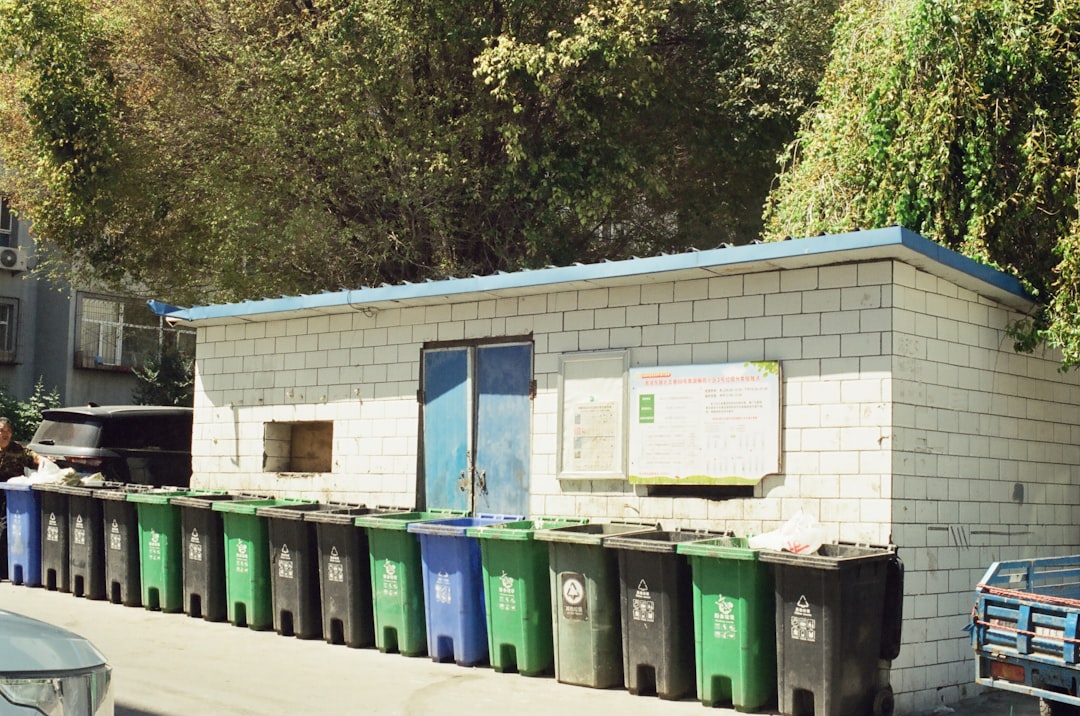
Certification tells you what a product contains and how it was made. It does not automatically solve what happens after you use it. Close to 40 per cent of what goes inside Singapore’s blue recycling bins cannot be recycled, because people put in things that cannot be recycled or contaminate the recyclables with food and liquids.
Zero Waste SG, an advocacy organisation, builds its campaigns around 4 pillars: food waste, single-use disposables, recycling at source, and circularity education. Each pillar addresses a different point of failure in the household waste cycle. Buying a certified product is one step. Disposing of it correctly is another.
Packaging certification also plays a growing role here. Producers of packaged products, including brand owners, manufacturers, importers, and retailers such as supermarkets, are required to submit packaging data and 3R plans to NEA. That means the packaging around your certified product is itself subject to a separate reporting requirement.

Conclusion: check the label before you buy
The zero waste label in Singapore is one of the most substantive consumer tools available in Southeast Asia. It covers real criteria, it involves independent verification, and it connects directly to national sustainability targets. The scheme’s credibility is supported by its alignment with the Global Ecolabelling Network, which sets international benchmarks for Type 1 ecolabels. That is not a minor detail. It places a Singapore-certified product on the same footing as green-labelled products sold in Europe, Japan, and North America. So the next time you reach for a cleaning product, a piece of furniture, or a set of curtains in a Singapore shop, look for the green leaf. The zero waste label on the front of the packet is not decoration. It is documentation.
Discover more about zero waste label
- Singapore Green Labelling Scheme, official certification directory
- Zero Waste Singapore
- Eco-labels in Singapore: navigating sustainability certifications (DEI, 2025)