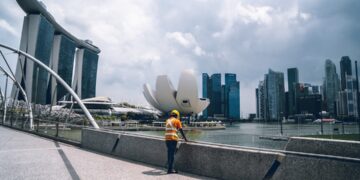


Bilingual education in Singapore is not a soft cultural policy. It is a structured economic strategy, and the data from 2026 show it is still working.
What the policy actually requires
Singapore’s bilingual education policy, enacted when the People’s Action Party was elected to power in 1959, requires all students to be proficient in 2 languages: English, the official language of administration and business, and one of the country’s 3 “Mother Tongue” languages, Mandarin, Malay, or Tamil, depending on their ethnic background.

English serves as the primary medium of instruction in schools, while students also study their Mother Tongue to preserve cultural heritage, promote ethnic identity, and foster social cohesion in Singapore’s multicultural society. The result is a population that functions in global business language from day one of school.
At the 13th Mother Tongue Languages Symposium in September 2024, Minister for Education Chan Chun Sing announced new initiatives to uphold bilingualism in the education system and to help students learn and use their Mother Tongue Language as a living language. Singapore’s Ministry of Education has reinforced this commitment with a $3 million investment to promote Mother Tongue Languages beyond formal schooling, signaling that bilingualism is treated as a living skill, not just an academic checkbox.
The salary premium is measurable and current
The career advantage for bilingual graduates in Singapore is not theoretical. It shows up in recruitment data.
As of April 2026, bilingual professionals in Singapore command an estimated 10% to 20% salary premium, according to placement data from Reeracoen. This financial return compounds over time, leading to significantly higher lifetime earnings and more frequent promotion opportunities.

While English is the language of global business, Mandarin is the language of regional influence. As China continues to lead in manufacturing, e-commerce, and green energy, Singaporeans who can negotiate in Mandarin have a distinct advantage. Mandarin remains the most sought-after second language due to Singapore’s extensive trade ties with Greater China.
How bilingualism builds cognitive strength
The salary premium reflects something deeper than language skill. It reflects the way the brain develops under a bilingual education system.
Bilingualism produces structural and functional changes in the brain that benefit Singapore residents throughout their lives. The brain managing 2 languages simultaneously builds stronger executive function, including task-switching, inhibitory control, and conflict resolution.
Bilingual professionals possess a distinct advantage known as “Executive Function,” the brain’s ability to manage complex tasks, switch focus rapidly, and prioritize information. Because bilingual individuals constantly navigate between 2 linguistic systems, their brains are conditioned for high-level multitasking. In a corporate setting, this translates to more efficient task management and a superior ability to filter out noise during a crisis.
Research published in Nature Aging and the Journal of Educational Psychology confirms measurable gains in cognitive health, cultural cohesion, and career earnings. These are not small-scale findings. They reinforce what Singapore’s education architects have argued for decades.
Expert perspective on bilingual education in Singapore
Singapore’s bilingual education model is unusual because it was never designed purely as a cultural exercise. It was designed as a market positioning tool. Graduates enter the workforce able to access 2 very different economic networks simultaneously: the English-language global finance system and the Mandarin-language Greater China business corridor. In financial services and regional corporate roles, this dual access is a direct revenue-generating asset. Hiring managers in high-value sectors increasingly treat Mandarin-English bilingualism as a threshold requirement, not a bonus. The policy essentially front-loads that requirement into the national education system, so Singapore graduates arrive ready rather than requiring additional investment from employers. That structural advantage is very difficult for competing talent markets to replicate quickly.
Industry perspective, financial services and human capital professionals in Singapore
The policy keeps evolving to stay relevant
A static policy would lose its edge over time. Singapore’s bilingual framework is not static.
The 2024 Mother Tongue Languages Symposium announced: more opportunities for secondary school students to offer Higher Mother Tongue Language to nurture more proficient students; a new structured MTL reading programme in primary schools to cultivate positive reading habits from young; and a pilot to increase MTL exposure in MOE Kindergartens to develop interest in MTL among pre-school children.
MOE will introduce a new structured reading programme, MTL SOAR, in primary schools from 2025. Primary 1 and 2 students will have 30 minutes of their MTL curriculum time set aside for reading and library activities. MTL SOAR will be progressively rolled out to all levels by 2029.
Singapore remains the primary gateway to ASEAN and North Asia. Keeping that position requires a population that can communicate across the region’s major business languages. The policy updates reflect that pressure directly.




Why bilingual education remains a competitive advantage
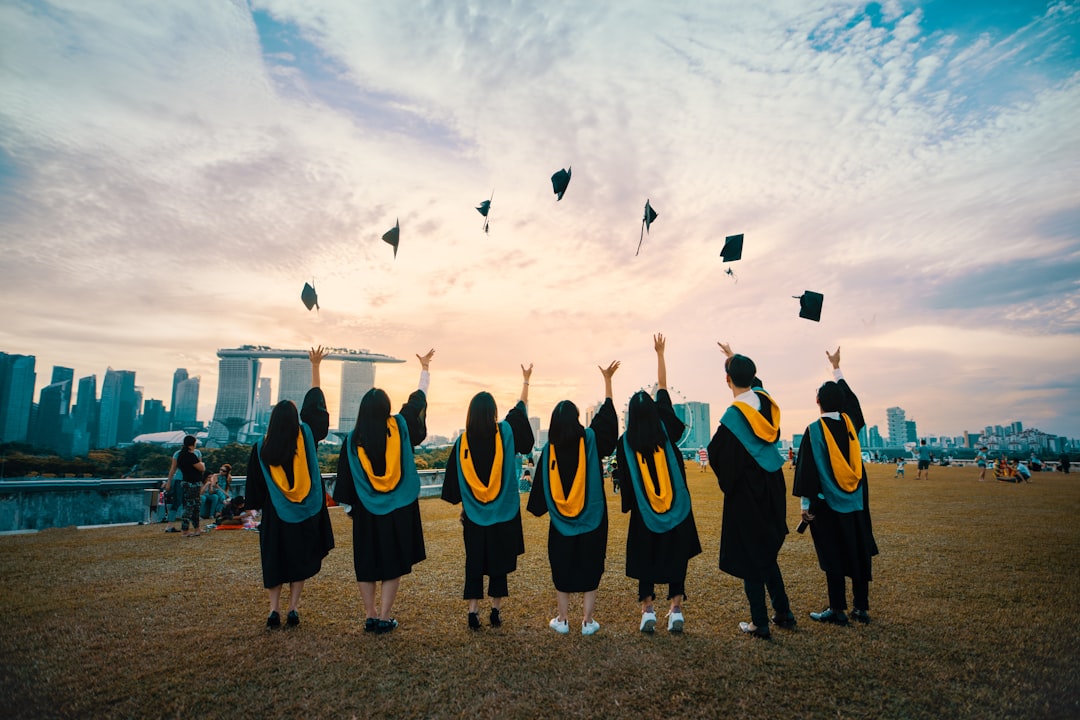
Bilingual education in Singapore produces graduates who earn more, think more flexibly, and access wider professional networks than their monolingual peers. Data from April 2026 shows that bilingual professionals command a salary premium of 10% to 20% over their monolingual peers. That figure represents real income, compounding across an entire career.
The policy is not accidental. It is the product of more than 6 decades of deliberate national strategy, continuously updated to match economic conditions. For any professional operating in or into Asian markets, the bilingual education system Singapore has built is a structural career asset. If you work in finance, trade, or regional leadership here, bilingual education is not background context. It is a core part of what makes Singapore graduates competitive in global careers.
Read our analysis of Singapore as Asia’s financial hub for more on how language, policy, and capital intersect in this market.
Discover more about bilingual education
- Strengthening efforts for students to learn and use their Mother Tongue Language from young (MOE Singapore)
- Advantages of Bilingualism in Singapore: 2026 Guide (Linda Mandarin)
- Hiring the Class of 2026: What Singapore Employers Need to Know About This Year’s Graduates (Reeracoen Singapore)